The thing with alignment.

Dear readers,
I keep hearing the word “alignment” from other coaches, in podcasts and in books. It always sounds like something you figure out once and then you’re set.
This is the story of how I learned it doesn’t work like that.
Happy reading,
Xaver
PS: New here? Every Tuesday I share honest reflections on selling a company for €60M and building two AI startups. Every Thursday is for paid subscribers - all frameworks, templates, and the full stack I built along the way. Click here to see full benefits.
Today’s article is sponsored by JUSTROCKET.
They are my go-to solution for scaling tech teams without the German hiring nightmare.
Highly recommend it for founders who need senior engineers fast - whether you’re building your first tech team, extending an existing one, or just tired of 4-month hiring cycles that go nowhere.
Dedicated team, fully managed, exclusively on your product. No freelancer chaos, no agency rotation, no knowledge loss. Up and running in weeks not months. My preferred and sustainable solution for scaling tech teams.
When I started my first company in 2016, I didn’t have a vision statement or a life plan. I had two things I wanted - to never work for anyone else, and to become financially free.
That was the entire thesis.
We worked 24/7 from a student flat in Maastricht. Every weekend, every holiday. Missed all parties, and family events.
But it never felt like sacrifice. Every hour pushed us closer to the two things we actually cared about. The work and the goal were pointing in the same direction, and that created a kind of energy I’d never felt before in my life.
I didn’t call it alignment back then. I didn’t have a word for it. I just knew that for the first time, I wanted to be doing exactly what I was doing.
That feeling lasted five years and it carried me all the way.
Then we sold the company in 2021.
On paper, I had everything I wanted. Financial freedom - done. Independence from corporate life - done. Both goals, checked off.
Except now, I had to stay for two years as part of the deal (called “earnout” or “golden handcuffs”).
And the thing I’d spent five years building to escape - being inside a corporate structure, sitting through meetings I didn’t need, attending conferences I didn’t believe in, following someone else’s processes - that became my daily reality.
I went from founder to employee. From the person making decisions to the person attending them.
The worst part wasn’t that it was bad. It was that it was empty. My identity had been completely fused with the company’s success for half a decade, and now the company wasn’t mine anymore. I still showed up. I still did the work. But the engine behind it - the reason I could push through anything - was gone.
I wasn’t fully misaligned. I was still in the industry, still around the product, still technically involved. But that’s almost worse. Because you can feel something is off without being able to name it. You’re close enough to what used to work that you keep expecting the old energy to come back. It doesn’t.
That’s when the burnout started. I was working without a reason that actually belonged to me.
I guess this is what people would call “misalignment”.
After I left, I thought the answer was obvious.
I just needed to build again. That’s who I am - a founder. That’s what I do.
So I raised millions again, hired a team, started my second AI company. The full playbook, from scratch.
But from day one, something was off.
Waking up wasn’t easy anymore. Calls felt heavy. Decisions drained me instead of fueling me. I kept waiting for the energy to show up - the same energy I’d had in that student flat in Maastricht.
But it never came.
I pushed through anyway. Because I thought alignment meant doing the thing that had worked before.
What I didn’t see was that I wasn’t aligned with building another company. I was aligned with the identity of being a founder. I was chasing who I used to be, not who I’d become.
My values had shifted underneath me and I hadn’t noticed. I’d already proven I could build and scale something. I didn’t need to do it again. But the identity was so strong, and so familiar, that I mistook it for alignment.
Eventually my body shut me down. The burnout symptoms came back and I had to leave the company.
What came next, I didn’t plan.
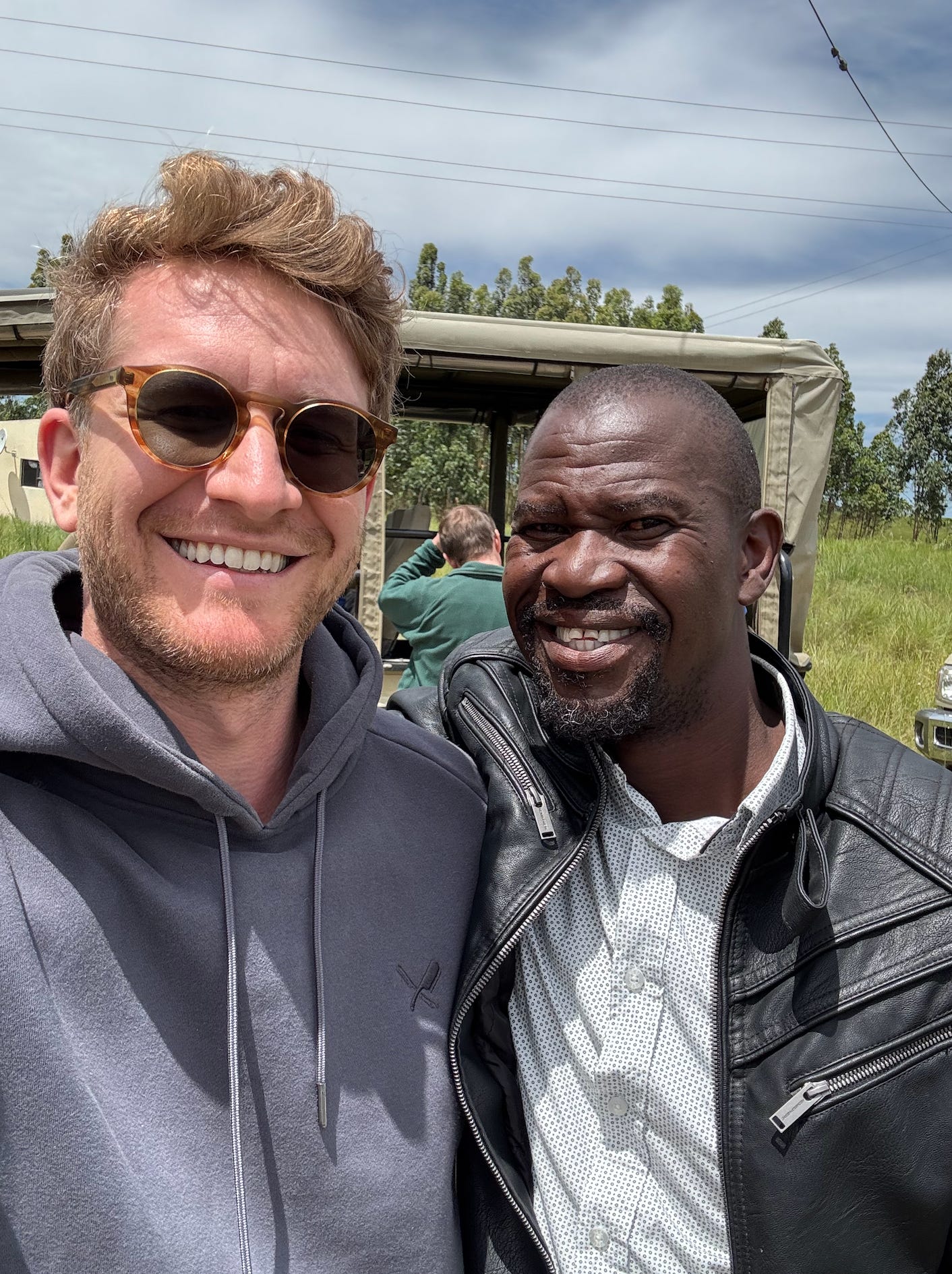
After stepping away and spending time in Africa reflecting, I started writing. Just telling my story. The burnout, the fear, the moments I don’t think most founders talk about openly.
Then I started coaching founders, one on one.
And something happened that I hadn’t felt in years. That same click from the early days. The feeling where the work doesn’t feel like work. Where you lose track of time because you actually want to be doing this.
But the reason was completely different.
It wasn’t about financial freedom anymore. It wasn’t about proving I could build something. It was about helping other people avoid the mistakes I’d made, or at least feel less alone while making them.
And for the first time in a long time, I was learning again. I had never written a newsletter before. I had no idea what made content good or bad. I didn’t know how to build an audience or what people actually wanted to read. The topics were familiar but everything else was new. And that felt exciting in a way I hadn’t felt since Maastricht.
My alignment had shifted from building for myself to giving back what I’d learned. I just didn’t know it until I stopped trying to recreate the old version and stumbled into what actually fit.
Here’s what I think alignment actually is.
It’s not a destination. It moves as you move. What drove me at 24 doesn’t drive me anymore. And that’s not failure, that’s just how it works.
The dangerous kind of misalignment isn’t feeling lost. When you feel lost, at least you know something is off.
The dangerous kind is feeling certain. Certain because the old answer worked so well that you keep reaching for it even after you’ve changed.
I still catch myself doing it.
Last week I read that Harry Stebbings was offered a few million for his media company years ago. And my immediate reaction was: I want that too. So I spent a couple of days thinking about how to make my coaching more scalable, how to build a brand that would be more sellable.
I was already sketching it out in my head. The old pattern, fully activated.
Then I went for a walk. And somewhere along the way, I asked myself a simple question: why would I want to sell the thing I’ve been building? The thing that actually fits? What would I even do afterwards?
I couldn’t answer it.
So I let the idea go.
That’s the thing about alignment. It doesn’t stay solved. Old patterns come back.
The difference is whether you catch it in time or whether you spend another two years chasing something that doesn’t fit anymore.